
Building a Wedding Flower Brand That Truly Connects
May 08, 2026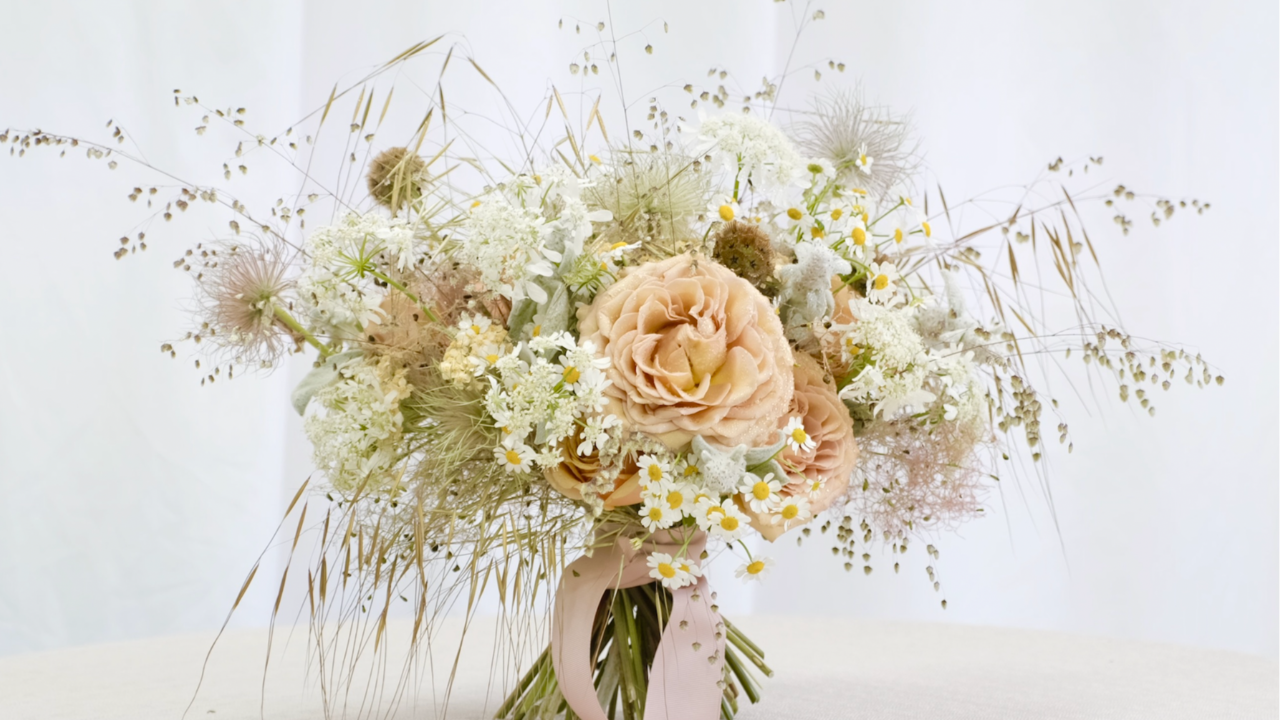
Image - The Airy Bridal Bouquet
Somebody once said that a brand is simply the way something makes you feel.
And at first, that can feel a little vague. A little intangible. Not quite practical enough to hold onto.
But the longer you work within floristry, and particularly within weddings, the more you begin to understand exactly what that means.
Because people don’t just choose flowers.
They choose how those flowers feel. They choose what they represent. They choose the atmosphere, the tone, the sense of occasion that comes with them.
And your brand is the thing that carries all of that.
Recently, we’ve been looking more closely at what sits behind wedding floristry, not just the designs themselves, but the structure that supports them. And if you’ve been following along, you’ll know that clarity sits at the centre of all of it.
This is where that clarity begins to take shape.
What a Brand Really Is
It’s very easy to think of branding as something visual.
A logo. A colour palette. A font.
And while those things are certainly part of it, they are not the foundation.
At its core, a brand is a way of taking what you do, your work, your service, your perspective, and shaping it in such a way that other people can understand it, recognise it, and connect with it.
It is, in essence, a translation.
A way of taking something that exists in your hands, in your head, in your instincts, and presenting it clearly to someone else.
So that they can feel something. And ultimately, so that they can trust it enough to choose it.
It Has to Be You
Everything begins with this.
Your brand has to be representative of who you are and what you offer.
Not an idealised version. Not something borrowed. Not something that feels fashionable in the moment.
But something that is genuinely reflective of your work.
If you are drawn to soft, romantic, classical floristry, then your brand should feel calm, elegant, considered. If your work is more contemporary, more sculptural, more expressive, then your brand should carry that same energy. It should feel alive, modern, perhaps even a little unexpected.
Because if there is a disconnect between what you show and what you create, people feel it.
And whether they can articulate it or not, it affects how much they trust you.
Authenticity, in this context, is not a buzzword.
It is the thing that holds everything together.
The Balance That Matters
At the same time, your brand doesn’t exist in isolation.
It needs to resonate.
And this is where things become slightly more nuanced.
Because while your brand should be true to you, it also needs to make sense to the people you are trying to reach. It needs to align, at least in part, with the expectations, preferences, and context of your ideal client.
This is where research becomes useful.
Understanding the venues in your area. The kinds of weddings that are taking place. The level of spend. The styles that are commonly chosen.
Not so that you can copy them.
But so that you can position yourself within that landscape with clarity.
When there is alignment between what you love to create and what your customer is looking for, everything becomes easier.
The conversations flow more naturally. The bookings feel more considered. The work becomes more consistent.
Of course, understanding this balance is one thing. Applying it, consistently and with confidence, is something else entirely.
Inside the Wedding Masterclass, we explore this in far more depth. From defining your offering through to shaping your brand and building a portfolio, it’s designed to guide you step by step into the reality of wedding floristry, not just how it looks, but how it actually works.
If this is something you’re considering, it’s well worth taking a closer look.
What Actually Makes Up a Brand
Once we understand the foundation, we can begin to look at the elements that bring a brand together.
And while these are often treated as separate decisions, they are, in reality, all expressions of the same idea.
Your brand name is the most immediate of these. It is the first point of recognition, the thing people return to, the way your work is remembered.
Then we have colour.
Colour carries an extraordinary amount of meaning. It can feel calm or energetic, refined or playful, restrained or expressive. The choices you make here will shape how your work is perceived before anyone has even looked closely.
Typography follows closely behind. The way something is written, the structure of it, the spacing, the weight, all of these things contribute to how your brand feels. Whether it feels approachable, luxurious, contemporary, or traditional.
A logo may sit alongside this, although it isn’t always essential. Some brands are carried entirely through name and tone. Others benefit from a visual mark that can be recognised quickly and easily.
And then there is language.
The way you speak about your work. The words you choose. The tone you adopt. Whether something feels warm, measured, confident, or distant.
This is often more subtle, but it is no less important.
Finally, there is imagery.
Not just individual images, but the overall tone of them. The consistency. The atmosphere they create when seen together.
Because over time, those images begin to tell a story.
The Importance of Restraint
One of the most important things to understand when building a brand is that it does not need to be everything.
In fact, it shouldn’t be.
There is a tendency, particularly at the beginning, to try to include too much. Too many ideas. Too many directions. Too many influences.
But strong brands are not built through accumulation.
They are built through editing.
Through choosing what stays, and more importantly, what doesn’t.
And that takes time.
It is not something you need to resolve in a day. It is something you return to, refine, adjust, and gradually bring into focus.
Where to Invest Your Energy
When it comes to putting your brand out into the world, there are many options available. Some of them genuinely useful. Others, less so.
At the beginning, it is worth being considered.
Think about what will actually support your business in a practical way.
How you and your team present yourselves when working. How your business is seen in real environments. How your work appears in context.
These are the things that build recognition.
Whereas other elements, the ones that feel more like additions than essentials, can often wait.
Because branding is not about decoration - It's about communication.
You Don’t Have to Get It Perfect
We put ourselves under so much pressure to get everything right from the outset. It always has to be the perfect name, the perfect colours, the perfect direction. But in reality, your brand will evolve, it'll shift as your work develops, as your confidence grows, as your understanding deepens.
And that isn't a problem. What matters is that you begin with something that feels honest. Something that you believe in. Something that you are comfortable standing behind.
Because you will be living with it. Working with it. Representing it.
A Final Thought
There is something quite powerful about building a brand that feels genuinely your own.
Not because it is different for the sake of it, but because it is clear.
Because it reflects your work. Because it aligns with your values. Because it connects with the people you want to work with.
And when that happens, something shifts.
People don’t just see what you do.
They begin to understand it.
And more importantly, they begin to feel it.
If you’re ready to take this further, the Wedding Masterclass is where we explore this in depth.
It brings together everything we’ve touched on here, from defining your offering and shaping your brand, through to building a portfolio and creating a business that works in practice.
If you’re serious about stepping into wedding floristry, it’s a natural next step.
Artist. Educator. Writer. Broadcaster.


