
Building a Wedding Portfolio That Truly Sells
Apr 17, 2026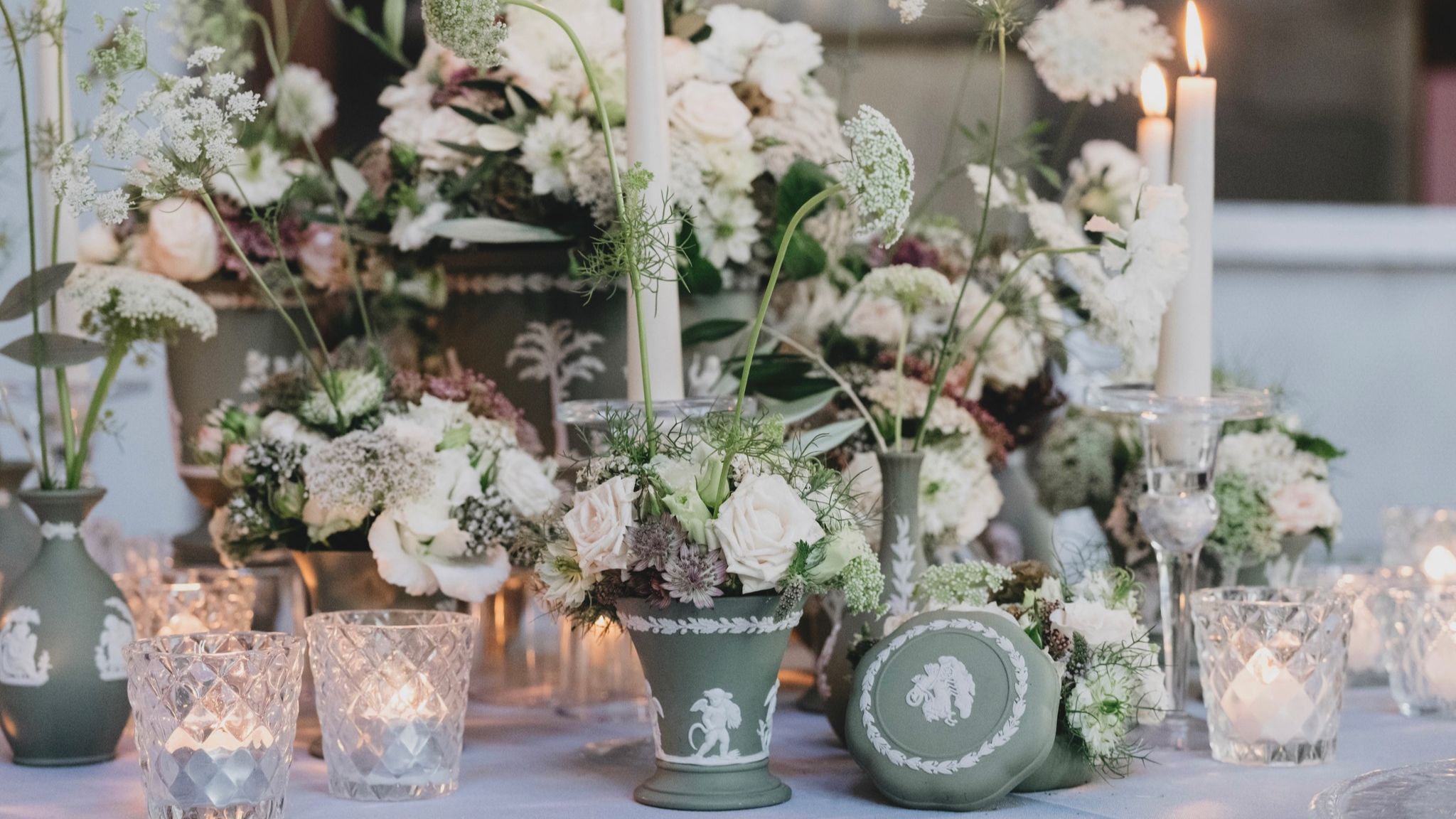
Image - The Jasperware Tablescape
There’s a particular moment, I think, in the early stages of working with weddings, where something doesn’t quite add up.
You might feel confident in your ability with flowers. You understand proportion, you understand colour, you can create something that feels balanced, thoughtful, complete. And yet, when it comes to weddings, the response isn’t always there in the way you expect.
The enquiries are quieter. The bookings don’t quite follow. Or perhaps they come in, but they don’t convert as easily as you’d like.
And very often, the reason for that sits not in your ability, but in something far more practical.
Your portfolio.
Because when it comes to wedding floristry, your portfolio is, quite simply, your shop window. It is the thing that shows your clients what you do, how you do it, and why it matters. It allows them to understand your work without explanation, and more importantly, it allows them to feel something about it almost immediately.
You can describe a bridal bouquet in a thousand different ways, but the moment someone sees an image, they know. They know whether it resonates, whether it feels aligned, whether it’s something they can imagine within their own day.
And that immediacy is incredibly powerful.
What Your Portfolio Is Really Doing
At its core, a wedding portfolio isn’t just a collection of images. It’s a tool. And more specifically, it’s your primary selling tool.
It’s the bridge between what you know you can do, and what your client is able to believe that you can do.
And that distinction matters.
Because clients don’t book based on potential. They book based on confidence. They need to see it. They need to feel reassured. They need to understand, very clearly, what you’re capable of creating for them.
I learned this very quickly when I first opened my own studio.
At that point, I’d already spent years working with flowers. I’d entered competitions, achieved awards, built a body of knowledge that I felt genuinely proud of. And I remember thinking, quite confidently, that opening a wedding studio would naturally lead to bookings.
It didn’t.
And the reason it didn’t was very simple. I didn’t have the portfolio.
I didn’t have the images that showed what I could do within the context of a wedding. I couldn’t demonstrate, in a way that felt immediate and convincing, what a bouquet would look like, or how an archway might feel, or how a space might come together.
And without that, there was hesitation.
A portfolio removes that hesitation.
Clarity, Authenticity, and Recognition
A strong portfolio does a number of things at once, but perhaps the most important is this. It makes you clear.
It should be immediately obvious to anyone looking at your work what you do, how you do it, and what they can expect from you. Not in a complicated way, and not in a way that requires explanation, but in a way that feels instinctive and easy to understand.
And that clarity comes from authenticity.
Your portfolio should feel like you. It should reflect your taste, your preferences, your way of seeing and composing. It shouldn’t feel like a collection of things you think you ought to show, but rather a considered expression of what you actually want to be known for.
At the same time, it needs to be accessible.
For most clients, this will be the first time they’ve booked wedding flowers. They’re not fluent in the language of floristry, and they don’t necessarily understand how everything fits together.
So the more clearly your portfolio is organised, the more it guides them, the more it helps them understand what goes where and what is possible, the more effective it becomes.
Because what we’re doing here is not just presenting work. We’re helping someone make a decision.
The Images That Stay With People
One of the simplest shifts you can make, and one that has an immediate impact, is to think carefully about what people see first.
If someone opens your portfolio and begins to scroll, those first few images carry a disproportionate amount of weight. They are the ones that set the tone, the ones that create that initial reaction, the ones that people will remember long after they’ve closed the page.
So those images need to be strong.
I often think of them as the images that make someone sit up slightly, the ones that hold attention, the ones that create a sense of recognition or excitement almost instantly.
From there, you begin to build depth.
Because a portfolio isn’t only about impact. It’s also about nuance. It’s about showing not only the larger, more expressive pieces, but also the smaller, more considered elements.
The details matter.
The buttonholes, the corsages, the quieter pieces that demonstrate care and precision. These are the things that show the full scope of your work, and they play a crucial role in building trust.
It’s the combination of those elements, the high and the low, the dramatic and the delicate, that gives your portfolio its strength.
Emotion, and Why It Matters
There’s another layer to this, which I think is often overlooked, and that is emotion.
The most memorable portfolios are not simply beautiful, they are emotive. They show moments. They show people. They show something of the atmosphere of the day.
A couple just after the ceremony. A glance, a movement, a moment of quiet celebration.
These images stay with people.
They move the work beyond arrangement and into experience, and that shift is important when someone is deciding who to trust with something as personal as a wedding.
Building a Portfolio, in Practice
Of course, understanding what a good portfolio looks like is one thing. Building one with confidence, is something else entirely.
If this is something you’re considering, it’s well worth taking a closer look.
The reality is, building a portfolio takes time.
There isn’t a single shoot that creates a complete portfolio. It’s something that develops gradually, through repetition, through consistency, through the simple act of creating again and again.
In the early stages, that often means creating the work yourself.
Self initiated shoots are one of the most effective ways to begin. Buying flowers, designing without pressure, photographing the results, and building a body of work that reflects your direction.
It doesn’t need to be perfect. It needs to be ongoing.
Alongside that, there are other opportunities. Collaborative shoots, working with photographers, gathering images from real weddings, all of which contribute to the process.
But even as your portfolio grows, it remains something you refine.
You remove what no longer feels aligned. You keep what does. You begin to shape it more deliberately, more carefully, more in line with where you want to go.
Where Your Portfolio Lives
The way we present our portfolios has evolved, but the principle remains the same.
Today, it is very much digital first.
Your website becomes the primary home, often in the form of a gallery or a series of galleries. Your social media, particularly more visual platforms, becomes an extension of that, another space where your work can be seen and understood.
And each image plays multiple roles.
It can live in your portfolio, it can be shared socially, it can be repurposed, revisited, and reused. Which makes each piece of work you create all the more valuable.
The Step That Is So Often Missed
There is one final element that is worth paying close attention to, because it is surprisingly easy to overlook.
Once someone has seen your work, once they feel excited by it, what happens next?
A portfolio should never feel like a closed experience. It should lead somewhere. It should offer a clear next step, whether that is an enquiry, a consultation, or simply a way to continue the conversation.
Because that moment, when someone is engaged, when they are interested, when they are imagining what you could create for them, that is the moment to invite them forward.
A Portfolio Is Not a Finished Thing
Perhaps the most important thing to understand is that your portfolio is not something you complete.
It is something you build into.
It evolves as your work evolves. It becomes clearer as your style becomes clearer. It grows with you.
And over time, it becomes more than just a collection of images.
It becomes a reflection of your practice, your perspective, and your place within the work that you are doing.
And when it is working well, it does something quite simple, and quite powerful.
It allows people to see you.
Artist. Educator. Writer. Broadcaster.


