
Curating Your Authentic Style
Mar 20, 2026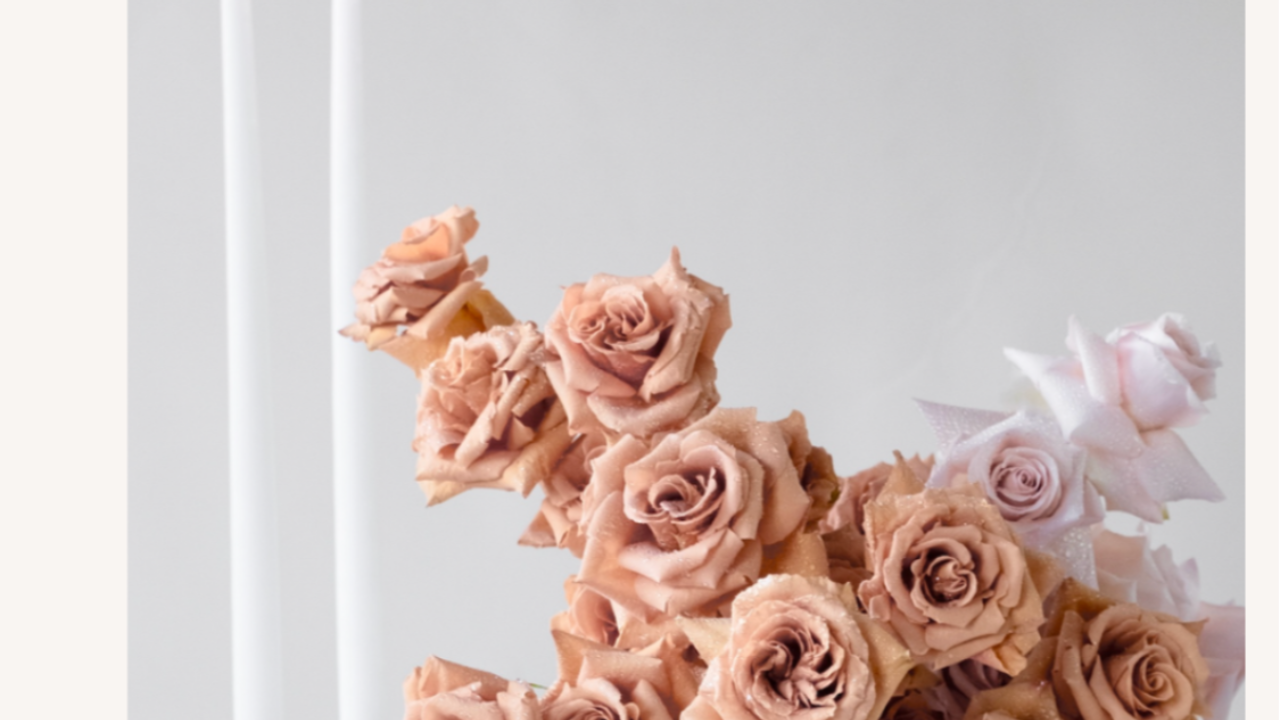
Image: Coffee & Cream
There comes a point, I think, in every creative journey when you begin to realise that what you're doing is not simply arranging flowers... you're building something far more substantial than that. You're shaping a way of seeing, a way of choosing, a way of composing, and ultimately, a way of presenting your work to the world.
And, whether you realise it yet or not, you're building a brand. At the very centre of all of that sits your authentic style.
I think this is something that's often misunderstood, because we tend to treat style as something decorative. Something that sits on top of the work, or something that comes later, once everything else is figured out.
But in truth, it's the foundation.
Your authentic style informs your design vocabulary, your design vocabulary informs your brand, your brand informs your products, and your products are what your customers ultimately buy. Everything flows from that starting point, whether consciously or not.
And the reason this matters so much is because of distinction. We don't want to be chosen simply because we're nearby, or because we happen to appear in a search result. We want to be chosen because of what we do, because of how we do it, and because of how it feels.
We want people to come to us for our work, not just for flowers in general.
That's the difference between being convenient and being sought after.
When you begin to build a style that's truly authentic, it gives you that distinction. It marks you out in the marketplace. It creates recognition. It builds trust. It generates value. And over time, it allows people to connect with your work in a much deeper way.
They're no longer buying flowers simply because they need them. They're buying your flowers because they want your eye, your sensibility, your particular way of doing things.
So, the question becomes... how do we actually begin?
For me, it always starts with the things we love.
And I do mean the things we genuinely, instinctively love. Not the things we think we should love, not the things that are trending, and not the things that feel commercially safe.
It has to begin with something that resonates on a personal level, because that's where authenticity lives.
A very simple way to begin is to take one prompt. It might be your favourite flower, for example.
From there, you can go to Google, or Pinterest, or any image-based platform, and begin to search. But the key is not to stop at the first image you see. You need to take your time.
Scroll. Explore. Allow yourself to respond.
What you're looking for is not the most beautiful image, or the most popular one, but the one that feels aligned. The one that makes you pause, almost instinctively, and think... yes, that feels like me.
That moment is important.
Once you've found that, you repeat the process and begin to expand it. Your favourite spring flower, your favourite foliage, your preferred colour palette, the types of containers you're drawn to, the materials you like to work with.
And then you can go further still.
Fabrics. Glass. Wood. Architecture. Interiors. Even branding elements like packaging or signage.
Because what you're doing is not simply gathering inspiration. You're beginning to map your own aesthetic.
And I think that distinction is important. This isn't just about putting together a general mood board. It's about understanding your own taste in a deliberate, thoughtful way.
When you lay all of these references out together, what you begin to see is a pattern. You start to recognise the things you're consistently drawn to, and more importantly, the way those things begin to speak to one another.
As you go through this process, there are three questions that I think are incredibly useful.
Do you love it?
Does it feel authentic?
Does it feel true?
Those three questions might sound simple, but they're doing a lot of work. The first is instinctive, the second is about cohesion, and the third is about honesty.
Does this actually reflect you, or is it something you've included for another reason?
There's also one rule that I would strongly encourage you to follow.
Don't use another florist's work as the basis for this process.
You can admire it, of course, and you can learn from it, use it as inspiration, but your authentic style can't be built from somebody else's finished designs...because then it isn't YOUR authentic style.
The whole point of this exercise is to uncover your own creative voice, and that can only come from your own responses and your own preferences.
Once you begin to gather a body of references, something interesting starts to happen.
You begin to notice repetition. Certain colours appear again and again. Certain textures. Certain forms. Certain moods.
You might find yourself drawn repeatedly to softness, or to contrast, or to a very particular palette.
This is where we move from simply collecting images to understanding what they're telling us.
At this stage, it becomes useful to start grouping things together.
Look for what belongs together. What feels cohesive. What feels like it's speaking the same language.
And sometimes, what you discover here isn't what you expected.
You might think you're building something around one idea, and realise that the real thread is something quieter, but far more consistent.
That's not a problem. In fact, it's exactly what we want.
Then comes the part that most people find challenging.
Editing.
Collecting references is relatively easy, but refining them is where the real work happens.
Over time, you begin to remove things. You start to notice that some elements no longer feel as strong as they once did, while others feel more and more aligned.
This process takes time. And it should take time.
Come back to it. Reflect. Adjust.
And gradually, what you're left with is something much more distilled.
Something quieter, perhaps. But much clearer. Much closer to the truth of your own taste.
Of course, at some point, this can't remain theoretical. You have to begin putting it into practice.
Of course, understanding your style is one thing, but creating regularly is what allows it to take shape.
Inside Flower Class, you’ll find over 350 lessons designed to help you build that consistency, giving you the space to experiment, refine, and grow with confidence.
Find out more here.
Take what you've uncovered and start creating.
At first, this doesn't need to be grand. In fact, it's often better if it isn't. It might be a small arrangement made at the end of the week with what you have left. It might be a bouquet created purely for the sake of exploration. It might be something you design simply to photograph, to test an idea, to see how something feels when it moves from image to object.
What matters is that you begin translating your references into something real.
Because it's only when you make something with your hands that you truly understand it.
And then, of course, share it.
Put it into the world, whether that's on your social media, within your portfolio, or simply shown to a small group of people whose opinion you trust.
Allow the work to be seen. And then observe.
What resonates? What feels right when you see it realised? What would you change if you were to do it again? This is where the process becomes cyclical.
Create. Reflect. Refine. And then, create again.
This cycle of creating and refining is at the heart of everything we do inside Flower Class.
With monthly coaching calls, creative challenges, and a global community of florists, you’re supported not just in learning techniques, but in shaping your own voice.
Over time, that repetition becomes incredibly powerful. Your authentic style begins to shape your design vocabulary. Your design vocabulary becomes more consistent, more recognisable, more assured.
That, in turn, begins to shape your brand.
And from that brand, you create work that your customers can understand, connect with, and ultimately choose.
It's also worth saying that feedback, in this stage, can be incredibly useful.
Not every piece you create will resonate in the same way, and that's perfectly normal. Some things will feel strong to you but receive a quieter response. Others will surprise you entirely.
The important thing is not to chase approval, but to pay attention, to notice where your work and your audience begin to meet.
That's where your work becomes particularly powerful.
Now, of course, there is a reality here that we have to acknowledge.
Not every client will come to you already aligned with your style.
And especially in the early stages, you'll need to create work that keeps things moving. You'll need to take orders that may not sit perfectly within your aesthetic, and that's absolutely fine.
You can still take those orders. You can still do that work. You can still build your business.
But you don't have to make that work the centre of your brand. Because what you choose to show is what you become known for.
In the beginning, there's often a balance.
Create what you need to create, but also make space to create what you want to create.
Perhaps one in ten of the images you share reflects your true style.
Then two.
Then three.
And gradually, over time, that balance begins to shift.
More of your work reflects your authentic style. More of your audience begins to recognise it. More of your enquiries begin to align with it.
Until eventually, your style becomes the dominant force in your business.
This doesn't happen overnight. But it does happen.
And I think this is where patience becomes incredibly important.
Curating your authentic style isn't something you rush. It isn't something you complete in an afternoon.
It's something you return to. Something you refine. Something you live with.
Your understanding deepens. Your references become richer. Your decisions become clearer.
The more you know, the more you see.
But wherever you are in your journey, you can begin. You can begin by paying attention - by noticing what you're drawn to. By questioning why. By collecting, connecting, and refining.
And, perhaps most importantly, by trusting your instincts.
Because only you can decide what feels authentic to you.
This is your voice. Your perspective. Your way of seeing.
And what you're building, ultimately, is not just a style.
You're building a world.
A world that reflects your taste, your choices, your sensibility, and your creative identity. A world that your customers can step into, recognise, and connect with.
And when that world becomes clear, something shifts.
People begin to recognise your work without needing to be told who made it.
They begin to understand what you stand for.
They begin to seek you out.
Not just because they need flowers. But because they want yours.
If you’d like to continue developing your style, with guidance, structure, and a supportive community around you, you’re very welcome to join us inside Flower Class.
It’s where technique, creativity, and personal style come together.
Artist. Educator. Writer. Broadcaster.


