
How to Begin a Wedding Flower Business (And Actually Make It Work)
floral wedding floral wedding masterclass wedding floristry May 01, 2026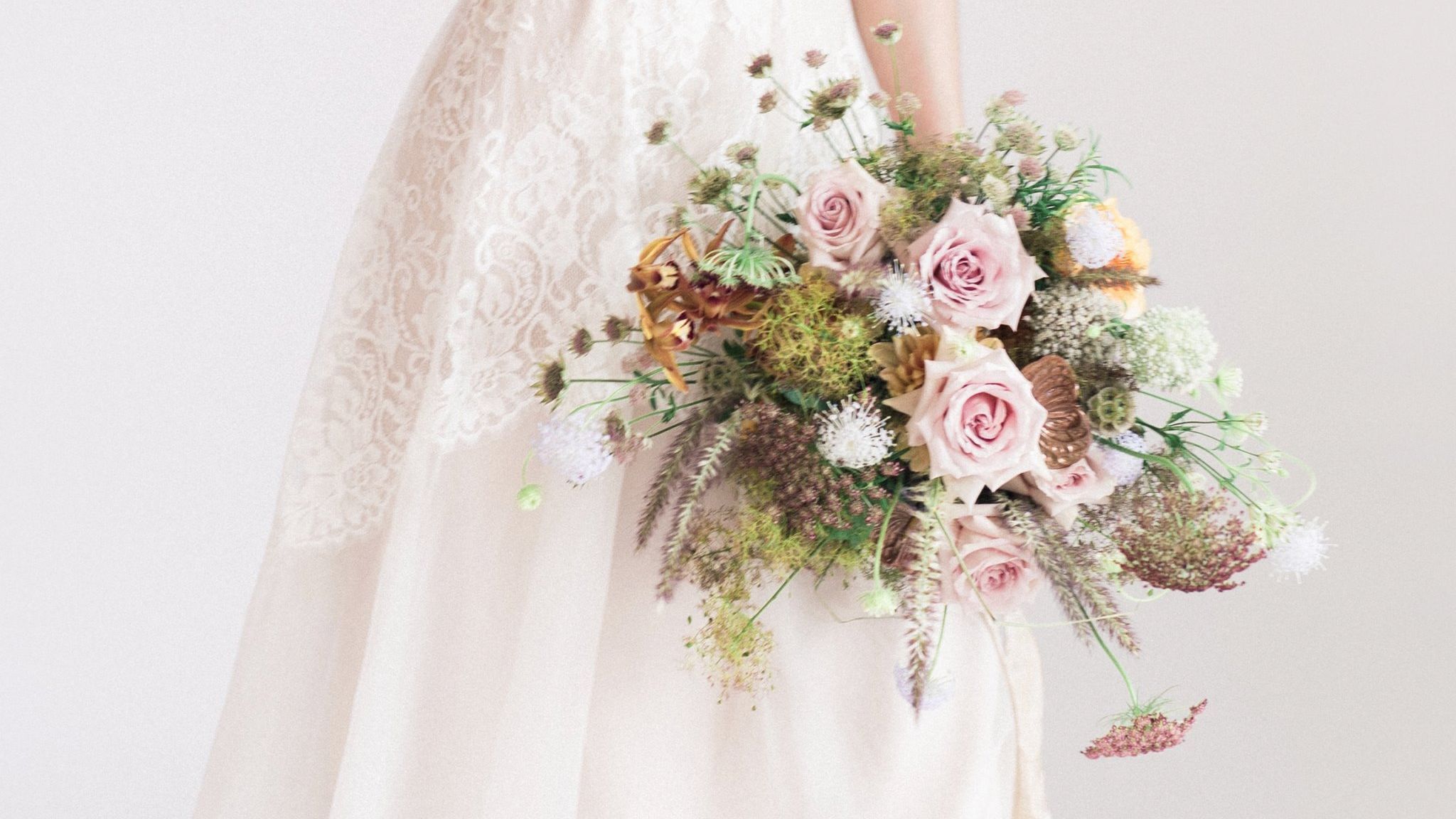
Image - A Classically Elegant Bridal Bouquet
If you’re considering stepping into wedding floristry, it’s worth understanding this from the outset.
You’re not simply learning how to arrange flowers for an event. You’re stepping into a business model that sits at the intersection of creativity, logistics, relationships, and trust. And while the flowers are, of course, central to it, they are only one part of a much larger picture.
Recently, we’ve been looking a little more closely at what sits behind wedding floristry, not just the designs themselves, but the thinking and structure that supports them. And if you’re at the point where you’re beginning to consider this as something more serious, something that could develop into a business, then this is where it begins.
With clarity.
The Opportunity, If We’re Honest About It
It’s worth taking a step back, just for a moment, and looking at the reality of the wedding industry as it stands today.
In the UK, the average cost of a wedding in 2026 sits somewhere between £20,600 and £21,990. In the United States, recent figures place the average at around $34,000, with projections continuing to edge slightly higher.
And while that isn’t purely spent on flowers, florals do form a meaningful part of that overall budget.
There’s a commonly shared guideline that around ten percent of a wedding budget is allocated to flowers and décor. And while that isn’t a fixed rule, it does give us a useful sense of scale.
Because what it tells us, quite clearly, is that wedding floristry is not a small market.
And perhaps more importantly, those numbers continue to grow.
But what makes it particularly compelling is not just the financial opportunity. It’s the nature of the work itself.
Weddings allow you to move beyond the constraints of a shop or a small studio. They allow you to create at scale, to work with space, to design atmospheres rather than just arrangements. There is a sense of theatre to it, a sense of occasion, and for many florists, that is where the work becomes truly exciting.
Before Anything Else, Clarity
One of the most common mistakes I see is people moving too quickly.
Building a website before they understand what they are offering. Posting work without a clear sense of direction. Trying to appeal to everyone, and in doing so, connecting with no one in particular.
So instead, we begin here.
With three very simple, but very important questions.
Who are you?
Who is your customer?
And how are you going to reach them?
What You Offer, and Why It Matters
When we talk about who you are, this isn’t about listing qualifications or recounting your experience. It’s something much more practical than that.
It’s about understanding what you are actually trying to create.
Are you drawn to classical, romantic work, with soft palettes and elegant forms? Are you more contemporary, more sculptural, more interested in pushing the boundaries of what wedding floristry can look like? Or perhaps you lean towards something more expressive, more dramatic, something that feels almost theatrical in its scale and presence.
Whatever it is, there needs to be a thread.
Because that thread becomes your offering.
And from that, we begin to shape what is often referred to as a unique selling point, although in practice, it is less about being unique for the sake of it, and more about being clear.
Clarity creates recognition. Recognition builds trust. And trust is what ultimately leads to bookings.
We’ll be exploring this in much more detail very shortly, inside the Wedding Masterclass.
If you’ve been thinking about this path, now is the time to step into it.
Finding Your Direction
If you’re not entirely sure what that offering looks like yet, that’s completely normal.
In fact, it’s expected.
One of the most effective ways to begin is simply to gather what you’re drawn to. Create a mood board. Build a visual vocabulary. Spend time looking, collecting, noticing.
Not what you think you should like. Not what appears to be popular.
But what genuinely resonates.
Over time, patterns begin to emerge. Certain colours, certain forms, certain textures. And gradually, that begins to form a picture of what your work could become.
That process doesn’t need to be rushed. In fact, it shouldn’t be.
Who It’s For
Once you have a sense of what you offer, the next step is to consider who it is for.
And again, this is something that benefits from specificity.
What does your ideal client look like? Not in a vague sense, but in a way that feels almost tangible.
Where do they live? What kind of venue would they choose? How many guests would they invite? What kind of atmosphere are they trying to create?
Because the clearer that picture becomes, the easier it is to align your work with it.
And when that alignment is there, something quite interesting happens.
The resistance disappears.
You’re no longer trying to convince someone that your work is right for them. You’re simply showing them something that already feels like it belongs.
Where the Work Comes From
The final part of this initial framework is understanding where your clients will actually come from.
And broadly speaking, there are five key routes.
The first, and often the most immediate, is direct clients. People who find you themselves, through your website, your social media, or perhaps through seeing your work in person.
The second is through planners. This tends to come later, once your work is established and your offering is clear.
The third route is through venues, often via preferred supplier lists.
The fourth comes through other suppliers. Photographers, cake designers, stylists. The people you meet on site, the people who see your work in context, and who may go on to recommend you.
And finally, there are referrals from your own clients.
Which, in many ways, are the most powerful of all.
Because they come with trust already built in.
Building Something That Lasts
Once you begin to understand these elements, the path forward becomes clearer.
You start with clarity. You define your offering. You understand who it is for.
From there, you build.
You create a portfolio that reflects your work. You develop a brand that supports it. You put the systems in place that allow you to operate professionally, consistently, sustainably.
And then, you begin to share it.
Through your website. Through your social media. Through real world interactions.
Gradually, that work finds its way to the people it is meant for.
Of course, understanding the structure of a wedding flower business is one thing, but putting it into practice is something else entirely.
This is exactly the work we go deeper into inside the Wedding Masterclass.
From defining your offering and building a portfolio, through to pricing, client experience, and creating designs at scale, it’s designed to take you step by step into the reality of wedding floristry, not just how it looks, but how it actually works.
If you’re considering this path, it’s well worth exploring further.
A Final Thought
It’s easy, I think, to look at the wedding industry and feel that it is already full. That there are too many florists, too many businesses, too much competition.
But in reality, it is far easier to stand out than most people realise.
Because most people don’t take the time to be clear.
They don’t define what they offer. They don’t decide who it is for. They don’t build with intention.
And when you do, even in a relatively simple way, it has a remarkable effect.
It makes your work easier to understand. Easier to connect with. Easier to choose.
And that, ultimately, is what allows a business to grow.
Not just in size, but in strength, in direction, and in longevity.

Artist. Educator. Writer. Broadcaster.

I'm Joseph
All Categories announcement autumn floristry beginners business strategy business strategy for florists business tips centrepiece masterclass collaboration eco friendly floral design everyday elevated first steps floral business strategy floral centrepiece floral centrepiece masterclass floral design floral design guide floral design school floral design theory floral design tutorial floral education floral insights floral installations floral installations masterclass floral marketing floral sales floral techniques floral wedding floral wedding masterclass floristry centrepiece floristry competition floristry tips flower care flower class flower conditioning flower grower flower guide flowers after hours podcast foliage guide free floristry class free floristry education free live training hands-on learning how to in person teaching instagram international floristry masterclass personal podcast professional floristry professional floristry course quiz recommendations recommended resources seasonal floristry spring floristry spring wedding flowers summer wedding flowers suppliers sustainable floral design top ten wedding floral design wedding floristry winter floristry world cup youtube

