
Let the Season Lead
Jul 10, 2026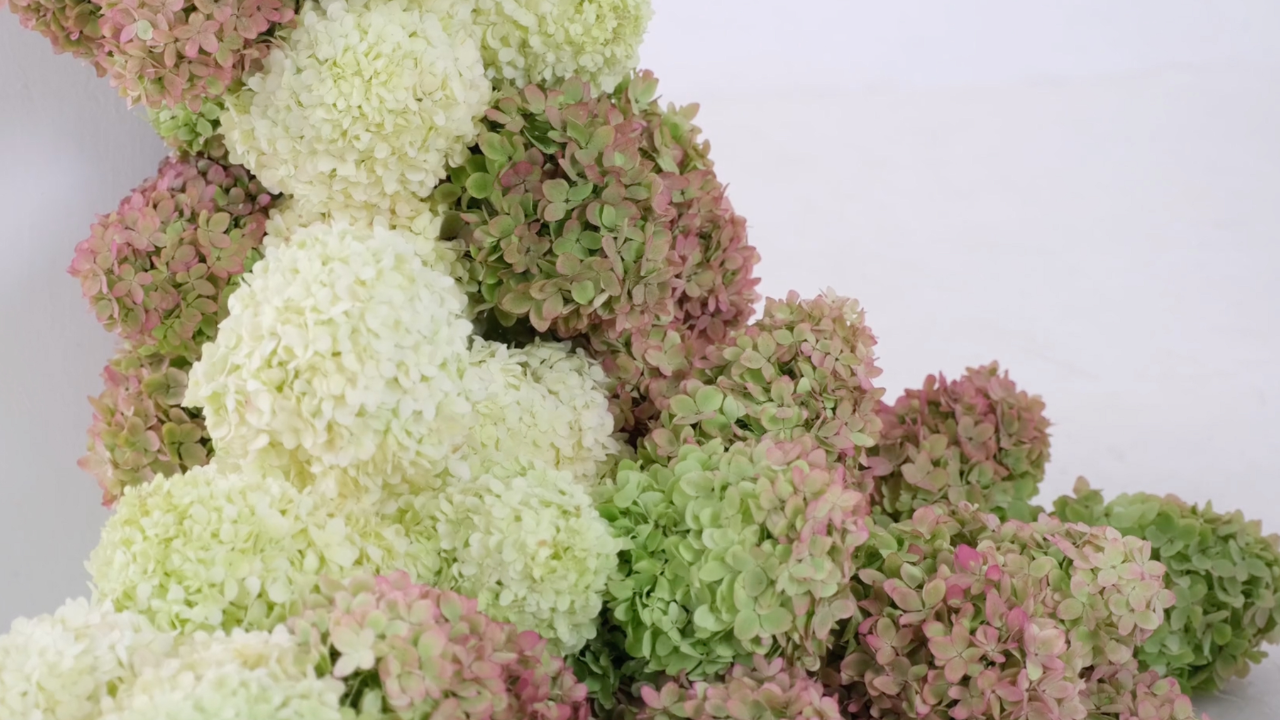
Image - On Hydrangea
At this time of year, hydrangeas are everywhere. Full, generous stems, wonderful texture, and quantities of them, all because they happen to be growing right now. I find myself drawn to them every July, and rather than fighting that instinct, I've learned it's usually worth following.
I think we can make the creative process far more complicated than it needs to be. There's a temptation to start with a fixed idea in your head and then go looking for the exact flowers to bring it to life. But some of my favourite work has started the other way round: by noticing what's abundant, what's looking particularly good, and letting that lead the design rather than the other way about.
That's exactly how this piece came together. I'd been looking at three varieties of hydrangea sitting in the studio, all in that soft, slightly faded palette you get in midsummer: limelight, with its pale acid green; maglite, with deeper, more autumnal cones; and kyushu, which I have a real soft spot for, with its delicate little butterfly-shaped flowers. Nothing about the brief called for hydrangea specifically. They were simply what was in front of me, looking gorgeous, and I let that be enough of a reason to begin.
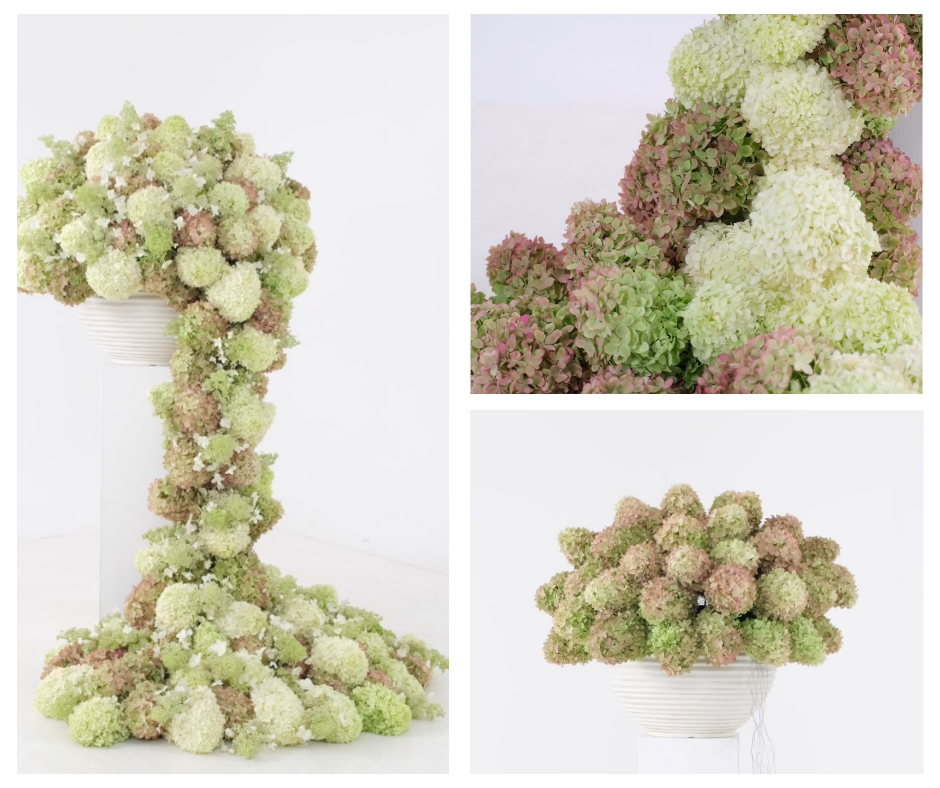
The piece itself sits somewhere between classical and contemporary. Up top, there's a rounded, domed arrangement in a large urn, quite traditional in its shape and proportion. From there, the flowers cascade down the front of the urn, down a plinth, and out across the floor, which gives the whole thing a much looser, more modern feeling. I like the tension between the two. The formality at the top holds the piece together, and the cascade is where it gets to breathe a little.
Mechanically, it's more straightforward than it might look. The cascade runs on a length of chicken wire pinned into the foam at the top and weighted at the floor, with individual stems worked in as it travels down. Some of the stems sit in water via small test tubes, and some don't, which I rather like, because hydrangea dries beautifully, and a few stems left dry simply fade to a paler, papery version of themselves over time. Nothing is wasted, and the piece keeps evolving even after it's finished.
None of this is really about hydrangea specifically, though. The same idea works whatever you've got an abundance of. Foliage would sit beautifully in a cascade like this, since it holds up well without water, and either a single variety or a mix could give you that same sense of movement without needing anything more delicate. Softer, more garden-style flowers, roses and the like, would work just as well, though you'd want every stem in the cascade sitting in its own little reservoir of water rather than going in dry, since they won't forgive you the way hydrangea will. Tropical flowers are worth considering too. Most of them last extremely well without water, so a cascade in anthurium or similar would hold its shape for days, though you may want a second layer of chicken wire underneath if you're working with anything heavier.
There's something practical in all of this too, not just aesthetic. Working with what's genuinely in season tends to mean better quality, easier availability, and a kinder price, since you're not asking for something out of its natural rhythm. It's also, in a small way, a more sustainable habit to build. But I'll be honest, the biggest reason I'd encourage it isn't practicality. It's that working this way tends to make the whole process more enjoyable. There's less searching, less second-guessing, and more simply responding to what's in front of you.
If you're planning your own work for the next few weeks, it might be worth pausing before you settle on a design and asking a different question first: not "what do I want to make," but "what's genuinely abundant right now, and what might it want to become." Quite often, that's a far more interesting place to start.
This piece belongs to a wider body of large-scale floral installations inside The Installations Masterclass & Flower Class, and I'll be sharing more about my thinking behind some of the pieces, along with the mechanics that make it all hold together, over the next couple of weeks.
Until next time,

Artist. Educator. Writer. Broadcaster.


