
The Question Worth Asking Before You Make a Floral Gift
Oct 09, 2026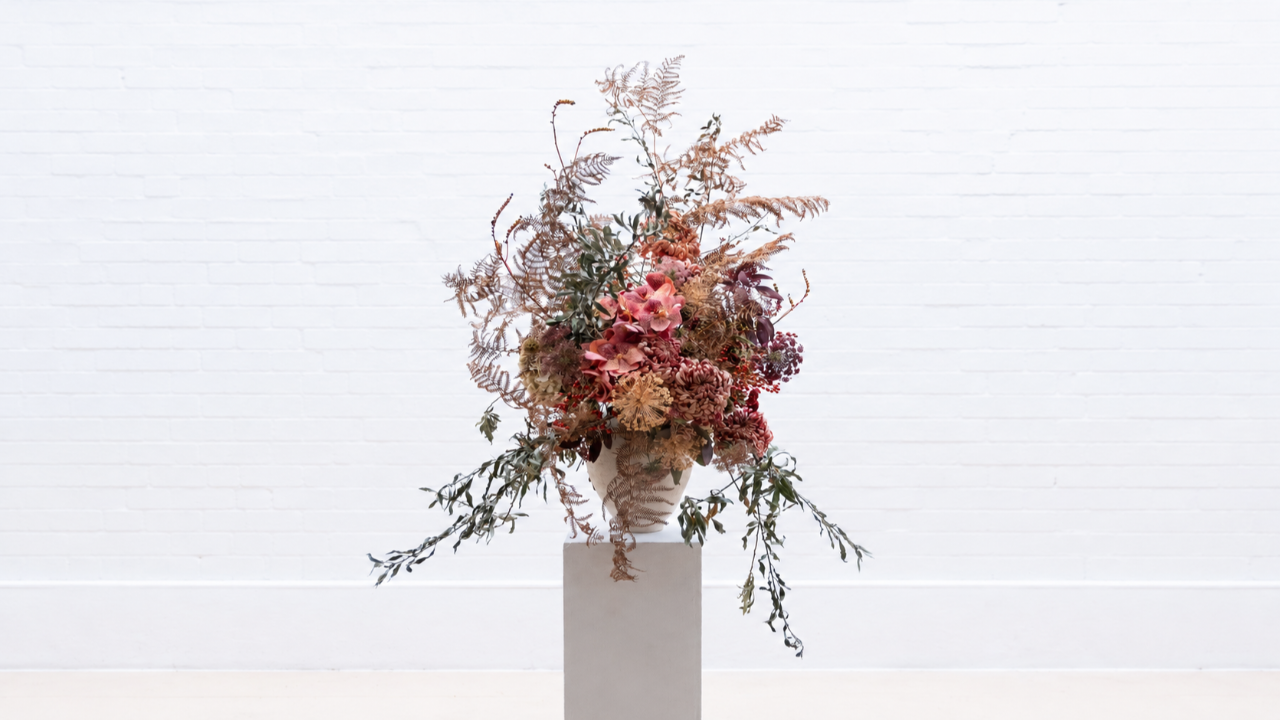
Image - The Statement Vase
There’s something rather lovely about making flowers specifically to be given to someone else.
It might be a grand gesture for an important occasion, a beautiful vase sent to mark a milestone, or simply something small made because somebody wanted to say thank you. Whatever the reason, I think the best floral gifts have one thing in common, and that is that they feel considered.
And by that, I don’t necessarily mean expensive or elaborate. It’s about thinking beyond the immediate beauty of the flowers and considering the person receiving them, how the design will live in their space, the materials we’re using and what will happen to the arrangement after it leaves our hands.
When we’re making flowers, it’s quite natural to become absorbed in the design itself. We’re thinking about our ingredients, the colours, the proportions, the shapes we’re creating and all the little details that make floral design such a fascinating craft. But when we’re creating something for another person, I think there’s a little more to consider, and those considerations can influence our decisions more than we might expect.
Take a vase arrangement, for example. We mightbe making something for a customer to give as a birthday present, a piece for a hotel reception or something much larger for a corporate event. They’re quite different occasions, but the principles behind those designs don’t necessarily need to be different at all.
Creating Designs That Can Work in Different Ways
One of the designs I teach inside my Everyday Elevated Masterclass is The Statement Vase, a robust, dramatic arrangement combining Vanda orchids, chrysanthemums, hydrangeas and a mix of fresh and dried materials. It has a generous, asymmetric shape, and what I enjoy most about it is how adaptable the idea is.
You could make a modest version for a customer collecting an order from your studio, or take the very same approach and make something much larger for a hotel bar, a reception desk or an event. The ingredients might change, the proportions might change and the finished arrangement could look quite different, but the thinking behind it stays much the same.
For this lesson I use dried bracken branches and allium seed heads alongside the fresh ingredients, and there’s a practical reason for that. Dried materials can be a real help with larger arrangements, particularly if you’re working commercialy, because you don’t have to keep big fresh branches in stock all the time. That saves time and it saves money. If a customer rings to ask whether their vase could be made considerably larger, or somebody comes into the studio wanting something dramatic at short notice, you can add scale without sourcing lots of extra fresh stems, and you’re able to say yes to the order. It will still have a cost, of course, and that needs to be accounted for, but I think there’s real commercial value in having ingredients you can keep on the shelf and use when they’re needed.
You certainly don’t need to use the same materials I’ve chosen. I might have access to beautiful dried bracken here in England, while somebody working in California, South Africa or somewhere else entirely might have a completely different selection to hand, and that’s absolutely fine. What matters is understanding what those ingredients are doing for the arrangement, and then finding something that does a similar job with what’s available to you. It’s something I’d gently encourage whenever you’re exploring one of my recipes. I don’t want you to feel you have to find every flower I’ve used and recreate the design exactly. I’d much rather you understood why I’ve made certain choices, so you can take the principles and make them useful in your own work.
There’s another small consideration with The Statement Vase, and that’s how it will be displayed. The design is what I call a 270, which means it’s meant to be appreciated from the front and from both sides rather than equally from every direction. That makes it a good choice for a sideboard, a reception desk or a bar, where it can sit comfortably and be seen from the angles that matter. It’s a simple decision, but I think it shows how knowing where an arrangement will end up can shape the way we design it.
It’s also built with the journey in mind. The stems sit in a nest of reusable, plastic coated chicken wire inside the vase, so each one is held firmly in position and nothing wobbles around, which means the arrangement can leave the studio for delivery without any worry. It’s a small thing, but it means the flowers reach the person receiving them looking just as you made them.
Making Beautiful Flowers Work Commercially
You know that just I’m as interested in the business side of floristry as I am in the beauty of it all, and I think gifting is an area where the two need to work well together. If you’re regularly making flowers for customers, it helps enormously to have designs you can adapt to different occasions, different budgets and whatever materials happen to be available. That doesn’t mean everything should look the same. It means understanding your techniques well enough that you can make changes without compromising the finished design.
Perhaps that’s a statement vase you can scale up or down depending on the order, or a small stock of dried materials for something larger at short notice. It’s also worth thinking about the practical details, such as how long a design takes to make, whether it will travel well, whether the container suits where it’s going and whether the ingredients will be available when you need them. None of that should take away from the enjoyment of making flowers, but it can make a real difference when you’re trying to make beautiful work and run a business at the same time.
That’s why I put so much emphasis on the thinking behind a design rather than simply following a recipe. It’s all very well for me to create something lovely and share it with you, but I’d like it to work for you and for your customers too. A creative hobby is a wonderful thing, and for anyone hoping to build a business, designs that can do a little more make a real difference. Once you understand the materials, the mechanics and the principles, you can start making decisions that suit you and the way you want to work.
The Art of Giving Flowers
Whether you’re making a hand-tied bouquet for a birthday or a dramatic vase arrangement for a client, there are lots of little ways to make a floral gift feel more thoughtful. It might be choosing a particular flower because you know somebody loves it, selecting a container that will work in their space, or building the arrangement securely enough that it arrives looking just as you made it.
I don’t think any of this needs to be complicated, and I certainly don’t think thoughtful gifting has to mean spending more money or making something more elaborate than the occasion requires. But I do think it’s worth considering what happens to the flowers once they leave our hands, because somebody else is going to be enjoying the decisions we’ve made.
If you’d like to explore some of these ideas further, you’ll find The Statement Vase inside my Everyday Elevated Masterclass, which is part of Flower Class, alongside a wide range of other floral design lessons. Across the membership, we explore the techniques, ingredients and design thinking behind all sorts of floral projects, with the aim of helping you take what you’ve learned and make it useful in your own work.
And in the meeantime, whether you’re creating something for a customer, a client or somebody you love, perhaps the question to carry into your next design isn’t simply, “How can I make this beautiful?”
It’s “How can I make this feel considered?”
Until next time,
Artist. Educator. Writer. Broadcaster.


