
Social Content: How to Build Trust and Book Better Wedding Flower Clients Online
Jun 12, 2026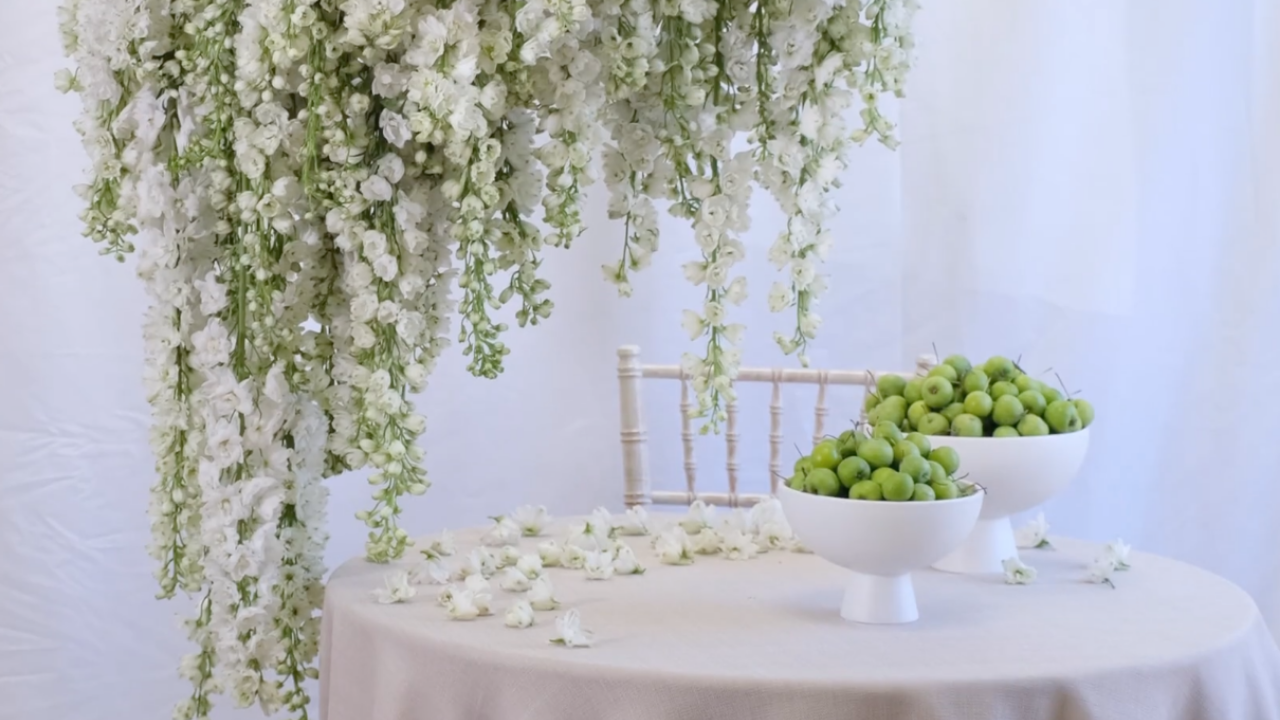
Image - A Green & White Wedding
Once you’ve begun building a portfolio, once you have those images, those videos, those little moments of goodness from the weddings and designs you’ve created, the next step is getting that work out into the real world.
Because it’s wonderful to have a portfolio. Of course it is. It’s wonderful to have beautiful images of your work, to have designs you’re proud of, to have a body of work that starts to communicate who you are and what you can do.
But we also need to make sure that work is reaching the right people.
And that’s where social media can be incredibly useful.
Not just as a place to post something pretty and hope for the best. Not just as a place to show other florists that you know what you’re doing. But as a way to bring your portfolio to life, to share the message behind the flowers, and to build that know, like and trust element that helps someone move from admiring your work to actually enquiring about your services.
So the question isn’t simply, “What should I post?”
The question is, “Will this resonate with the person who I actually want to book me?”
Think about your ideal consumer
When you’re creating social content for your wedding flower business, I want you to think first about the client you want to reach. The bride, the groom, the couple, the person who might one day book your wedding flowers and trust you with one of the most important days of their lives.
Does the content align with them?
Will your ideal customer like this post?
Will they save it?
Will it resonate with them?
Will it help them understand what you do, what you stand for, and why they might want to take the next step?
Because it’s very easy, especially as florists, to accidentally create content for other florists. And I understand why this happens - we love the flowers. We love the mechanics. We love the colour palette, the texture, the stem placement, the seasonal ingredients, the little technical decisions that make a design work. We know when something has been difficult. We know when something has been done well. We know when a mechanic is clever, or when a certain flower has been placed in just the right way.
Other florists know that too.
But your wedding client probably doesn’t.
And that’s not a criticism of the client. Of course it isn’t. They’re not florists. They’re not spending their days thinking about mechanics, conditioning, stem counts, sourcing, water sources, labour, van loading, site access, or the particular emotional journey of trying to keep flowers happy in the middle of summer.
They may simply see something beautiful.
And that’s a lovely place to begin. But if we want social media to actually help build the business, we have to bridge the gap between what they see and what we know.
That means bringing them into the thinking.
It means showing them the richness behind the finished image.
It means helping them understand not just what you made, but why it matters.
Build trust by explaining the why
One of the most useful things you can do on social media is explain the why behind your work.
Not just the how.
The how is interesting, of course. People love a process video. They love seeing the flowers arrive, the studio fill up, the designs come together, the empty room become something softer and more beautiful. All of that is useful. All of that helps people understand the labour and the craft.
But the why is where the trust really begins.
Why did you choose those flowers?
Why did you recommend that scale?
Why did you place flowers at the entrance rather than spreading the budget thinly across lots of smaller pieces?
Why did you suggest a low table design rather than something tall?
Why did you avoid a certain flower because it wouldn’t hold well in heat?
Why did seasonality shape the colour palette?
Why did you recommend candlelight, vessels or a particular mechanic to support the overall design?
These are the things your client often does not automatically know. And when you explain them in a clear, generous, intelligent way, you are not giving too much away. You are showing your expertise.
That matters enormously in wedding floristry, because most couples have never planned a wedding before. They might not know what creates atmosphere in a room. They might not know where flowers will have the most visual impact. They might not know why something costs what it costs, why certain blooms aren’t available, or why an installation that looks effortless in a photograph may have taken hours of preparation, labour and experience to create.
So help them understand.
Explain why flowers cost what they do. Explain why certain blooms aren’t available all year round. Explain how sourcing works. Explain why a particular design decision makes sense for that space, that season, that budget and that client.
It isn’t patronising, it’s education.
And education builds trust.
Know, like and trust
There are so many options for people online. So many florists, venues, planners, photographers, stylists, suppliers, images, reels, posts, opinions and beautiful things passing in front of their eyes every single day.
So, really, the question is not simply, “How do I get attention?”
The better question is, “How do I build trust?”
I think of it in a very simple way. First, people need to know of you. Then, over time, they begin to like you. Then, if you keep showing them useful, thoughtful, beautiful, intelligent content, they begin to trust you.
And when someone starts to trust you because of the work you do, what you stand for, how you explain things and the services you offer, that’s when a real connection begins.
This doesn’t happen because you posted one lovely photograph and hoped for the best. It happens because your content keeps showing people what you do and why it matters, consistently. It happens because your content has a point of view. It happens because you are useful. It happens because you are generous with your knowledge. It happens because people begin to feel, “This person knows what they’re doing. I understand their work. I trust their taste. I like the way they communicate.”
And in a wedding flower business, that feeling is incredibly valuable.
Because a couple isn’t just buying flowers from you. They’re trusting you with atmosphere, timing, budget, logistics, family expectations, venue restrictions, seasonal availability and one of the most photographed days of their lives.
They need to feel that you're a safe pair of hands.
Social media can begin building that feeling long before they ever enquire.
Be gracious and show the wider world of your business
I also think it’s really important to be gracious on social media.
And by that, I don’t mean performative generosity. I don’t mean trying to look like the patron saint of collaborative wedding suppliers. I mean genuinely showing the wider world of your business and being generous with the people who help bring that world to life.
Credit the flower farm. Tag the photographer. Mention the venue. Celebrate the planner. Thank the freelancers. Share the suppliers. Show the growers you buy from, the venues you work in, the businesses you collaborate with, the people who help make the work possible.
That does a few things.
Firstly, it’s good manners. And we do love good manners.
Secondly, it shows people the full 360 world of your business. It shows that your work is not created in isolation. It shows the relationships, the sourcing, the suppliers, the venues, the collaborators and the wider ecosystem behind the finished flowers.
And thirdly, quite practically, it helps your work travel further.
A venue may reshare your post. A photographer may recommend you. A planner may remember you. A flower farm may introduce your work to their audience. A couple may discover you because they were looking at a venue they love, or following a photographer they admire, or researching suppliers who already resonate with the kind of wedding they want to create.
That’s important, because your audience might not only be the people who already follow you.
Your audience can also exist around the people, places and suppliers your ideal client is already paying attention to.
If your dream client wants to book a particular venue, then that venue’s audience matters. If your ideal client is likely to work with a certain planner, photographer, stylist, stationer, bridal boutique, cake designer or flower farm, then those people may already be speaking to the kind of client you want to reach.
So be smart about that. And not in a fake, transactional, “please reshare me immediately” sort of way. Nobody enjoys that. But in a thoughtful, aligned way. If you’re working with suppliers who share your values, your aesthetic, your level of service and your ideal consumer, then social media gives you the opportunity to connect those worlds together.
It's community over competition in a very practical sense.
It doesn’t weaken your business - it strengthens the world around it.
Show the richness of everything you can do
One thing I often say to students is: show me the richness of everything you can do.
And this is especially true on social media.
No one wants something to feel monotone. Your audience needs to see the depth and breadth of your creativity. They need to understand not just that you can make a bouquet, but that you can shape an atmosphere. That you can dress a ceremony. That you can create softness on a table. That you can bring drama to an entrance. That you can create intimacy, scale, movement, colour, romance, texture, stillness or abundance, depending on what the wedding needs.
Your social content should show that range.
That doesn’t mean it should feel chaotic. It still needs to be aligned. It still needs to sit within your world. But within that world, show people what is possible.
Show the bridal bouquet, yes, but also show the table flowers.
Show the ceremony installation, but also show the little guest book arrangement that made the entrance feel thoughtful.
Show the full room, but also show the detail of the peony that only lasted for two weeks that season and made the whole palette sing.
Show the finished design, but also show the care that went into making it.
Show the beauty, but show the brain behind the beauty too.
Because clients often do not know what they can ask for until you show them what exists. They may come to you thinking they need bouquets and table centres, and that might be the limit of their floral imagination at that point. Then they see you dress a staircase. They see you flower a bar. They see you create a meadow around a sign. They see you add flowers to a cake table, a mantelpiece, a ceremony aisle, a welcome area, or a long dining table glowing with candlelight.
Suddenly, their idea of what flowers can do begins to expand.
It's not pushy, it's an education that's helping your next potential client imagine the atmosphere of their day more fully.
Give people the next step
Now, here’s the part that many people forget.
Your social content should not only inspire people, it should move them.
And by that, I mean it should give them a clear next step.
Because it’s not enough to post something beautiful and hope that the right person somehow knows what to do next. People are busy. People are distracted. People are scrolling while watching television, cooking dinner, half listening to their partner, or telling themselves they’re only going to look at Instagram for five minutes, which we all know is a lie.
So make the next step easy.
Use calls to action. Not in a desperate way. Not in a way that feels like you’re banging a saucepan and shouting “book me” into the void. But in a clear, calm, useful way.
Invite people to visit your website. Invite them to view your portfolio. Invite them to read more about your wedding process. Invite them to enquire about their date. Invite them to look at your prop hire collection, if you have one. Invite them to send a message if they’re beginning to think about wedding flowers.
Use your bio link. Use story links. Use captions. Use reel text. Use pinned posts. Use whatever tools the platform gives you, because the goal is to get people off social media and onto where we actually want them.
And where do we want them?
Onto your website. Into your portfolio. Reading your process. Looking at your enquiry form. Booking a consultation. Taking the next step towards working with you.
Instagram is wonderful for connection, but your website is usually where the relationship becomes more serious. That’s where they can see your work properly, it's where they can understand your services, where they can learn about your process, your values, your style, your minimum spend and most importantly, how to enquire.
Social media opens the door, your website invites them in.
Bring your portfolio to life
At its best, social media is an extension of your portfolio.
It's where your portfolio comes to life. It's where you can share more about the message behind the flowers, where you can create that know, like and trust element within your business. It's where you can show not only what you made, but why you made it, how it served the client, how it transformed the space and how it might resonate with someone planning their own wedding.
But it has to be used with intention otherwise, it just becomes noise. Pretty noise, perhaps, but noise all the same.
So think about your ideal consumer, think about what will resonate with them. Think about how you can build trust, about how you can explain the why behind the work. Think about how you can show the richness of all your creativity. Think about the suppliers, venues and audiences your work is connected to and think about how each piece of content can guide someone gently towards the next step.
You don’t need to do everything, you don’t need to chase every trend, you don’t need to become a full time media company overnight, though I appreciate the internet does sometimes make us all feel that this is apparently the requirement now.
You need to be intentional.
Look at what connects. Look at what people save. Look at what they share. Look at what gets them onto your website. Look at what starts good conversations. Look at what brings in the kind of enquiries you actually want. Then do more of what makes sense.
Because social media is not just about being visible, it's about being understood.
And when the right people begin to understand not just what you make, but why it matters, your content starts doing something much more useful than filling a grid.
It starts helping your business move.

Artist. Educator. Writer. Broadcaster.


