
Where to Begin with Floral Installations
Jul 17, 2026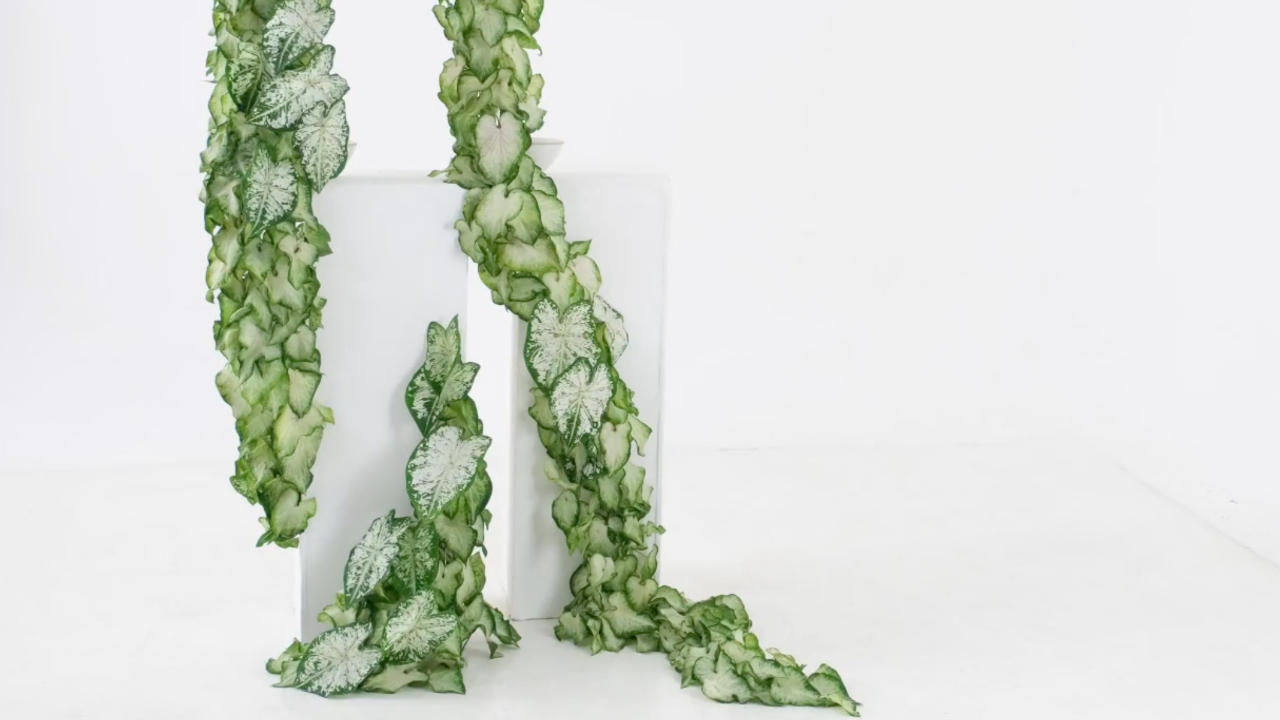
Image - On Caladium from Installations Masterclass
Someone asked me recently, after a demonstration, how anyone decides to take on their first installation. Not how you design one. Just how you decide you're ready to try.
It's a good question, because I don't think readiness is really the thing that's missing for most florists. What's usually missing is a sense of where to start that doesn't feel like throwing yourself in at the deep end.
As a viewer, we tend to only see the finished photographs of installation work: flowers suspended from ballroom ceilings, arches built for a single night, immersive spaces that look as though a small army put them together. And sometimes that is the case. But that scale isn't where the work has to begin, and treating it as the standard is what makes the whole area feel more closed off than I think it needs to be.
Choosing a sensible first project, not an impressive one
I think there's a natural temptation to measure ambition by size when you're starting out. The bigger the design, the more it must prove.
In practice, the right first installation is rarely the largest one available to you. It's the one that suits the space, responds properly to the brief, and can be planned, transported, installed and removed with confidence. A modest architectural piece will usually teach you more than an ambitious suspended design that hasn't been properly thought through.
Working around an existing structure is a good place to find that first project. A fireplace, a doorway, a staircase, an archway. Something already there that you're responding to, rather than building from nothing. It gives you a fixed point of reference, so you start to notice how the flowers relate to the building around them, how someone's eye moves through the space, and how differently scale behaves once a design leaves the workbench and enters a room.
A freestanding piece, such as a generous urn or a pair of dressed pillars, offers a different kind of starting point. It gives you a framework you control from the outset, so you can explore height and visual weight without needing to think about rigging, suspension or how a structure will behave once it's fixed to someone else's ceiling.
Thinking beyond the flowers themselves
Once you're working at any scale beyond a standard arrangement, the flowers become only one part of what you're managing.
You're also thinking about how the structure gets into the venue, how much the finished piece weighs, what the building can actually support, where the flowers will get water once they're in position, and how everything comes down again afterwards. There may be restrictions on fixing anything to walls or ceilings. Access might be limited to a narrow window either side of an event. Floors and surrounding surfaces may need protecting. Sometimes the framework needs to be built and tested somewhere else entirely before it ever reaches the site.
None of that is the glamorous part of the job. But it's the part that decides whether a beautiful idea actually survives contact with a real venue.
What I've learned over the years is that confidence in installation work rarely comes from being brave enough to attempt something bigger. It comes from understanding the space you're working in, the mechanics holding everything up, and the practical limits you're designing within. Sometimes that means simplifying an idea, changing its position, or splitting a structure into sections that can be assembled on site. That isn't a failure of imagination. Very often it's exactly what lets the idea work at all.
A guide to help you find your starting point
With this in mind, I've put together a new free guide called Where to Begin with Floral Installations.
Inside, I walk through several types of installation work, from statement-scale and architectural pieces to freestanding, immersive and suspended designs, and share some thoughts on which might suit you depending on the space and brief in front of you. There's also a set of practical questions worth working through before you commit to a design: access, finished weight, frameworks, venue restrictions, water, transport and de-rig.
DOWNLOAD YOUR FREE COPY OF WHERE TO BEGIN WITH FLORAL INSTALLATIONS
My hope is that it makes larger-scale work feel less like one enormous leap, and more like something you can move towards deliberately, one project at a time.
Until next time,
Ready to take your installation work further?
Inside the Installations Masterclass, I’ll guide you through the structures, mechanics, planning and practical decisions behind creating larger-scale floral work with greater confidence.
The full Installations Masterclass is included within Flower Class, alongside our complete library of floral design education, or you can explore the Masterclass separately.
Artist. Educator. Writer. Broadcaster.


