
What Competitions Taught Me About Wedding Floristry
May 22, 2026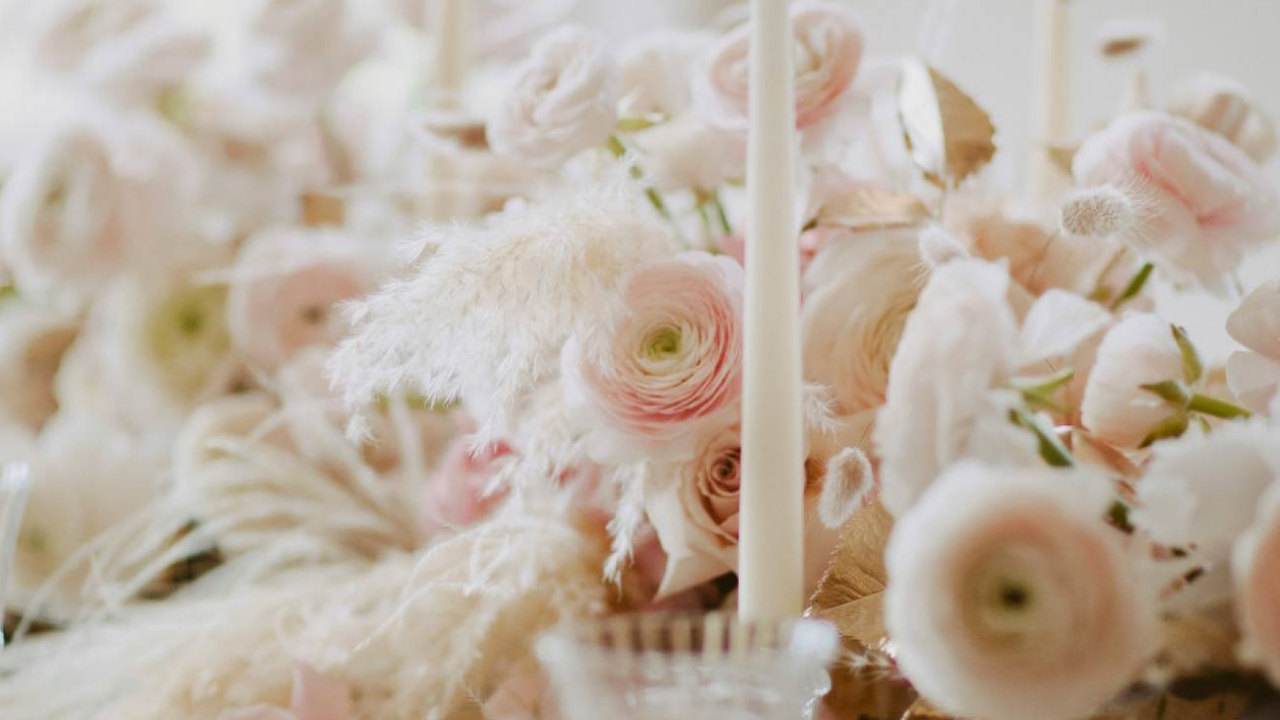
Image - A Ranunculus Wedding Scape
Every year, as The RHS Chelsea Flower Show arrives, I find myself thinking not only about flowers, but about ambition.
Chelsea Flower Show has a particular kind of electricity to it. The anticipation. The pressure. The excitement of knowing that somewhere, behind closed doors and canvas walls, designers are wiring branches into impossible places, conditioning flowers at midnight, quietly hoping that all the tiny details they’ve obsessed over for months will somehow come together into something beautiful.
Having been fortunate enough to win five Chelsea Gold Medals, and four Best in Show titles, I can tell you that what people see on television is only a tiny fragment of what Chelsea really is. Beneath the spectacle sits an extraordinary amount of planning, organisation, commercial awareness and problem solving. Every stem has to justify its place. Every decision has consequences. Every design must not only be beautiful, but executable.
And strangely enough, I think wedding floristry has far more in common with Chelsea (and other floral competitions & flower shows) than many people realise.
Because the very best wedding floristry sits at the intersection of creativity and logistics. It asks us to be designers, certainly, but also project managers, stylists and problem solvers all at once. Wedding floristry rewards creativity, but it also rewards preparation, systems and commercial thinking.
I think that’s one of the reasons weddings continue to appeal to so many florists, even during periods of economic uncertainty. Wedding florals are not impulse purchases. They're deeply emotional investments. Couples continue to prioritise gathering, celebration and atmosphere, even when spending habits elsewhere begin to tighten. In practical terms, it means wedding floristry can offer something incredibly valuable to a creative business: visibility and stability further into the future.
A wedding booked today may not take place for another twelve or eighteen months. Deposits secured now can create breathing room within a business. A strong wedding calendar can provide structure and momentum that many other areas of floristry simply cannot.
But I also think there is a misconception that wedding floristry is instantly profitable automatically. It isn’t.
One of the most important lessons I learned early on was that beautiful work alone is not enough. Beauty has to function commercially. If a design takes six hours to create, requires a van hire, extensive conditioning time and complex installation mechanics, then the pricing has to reflect that reality honestly. Otherwise, what appears to be a successful wedding business from the outside can become exhausting very quickly behind the scenes.
This is something we explore in considerable depth inside The Wedding Masterclass. Not simply how to create beautiful wedding flowers, but how to build wedding work that functions professionally and profitably in the real world. Mechanics, workflow, installations, consultations and client experience all matter just as much as the flowers themselves.
When I look back at the growth of Joseph Massie Flowers, some of the biggest shifts did not come purely from becoming more creative. They came from becoming more strategic.
We became more thoughtful about the kinds of weddings we wanted to attract. The work you show becomes the work you're often asked to create. When your portfolio begins to communicate a clear point of view, clients start finding you for the specific thing that you do well.
That's an enormously important turning point for many florists, and it’s something I encourage Flower Class members to think about often. Your portfolio isn't simply a collection of images. It is a reflection of your creative identity and ambitions.
And then, of course, there's the practical side of weddings that rarely gets discussed openly enough.
The additional opportunities within wedding floristry can be extraordinary when approached intentionally. Personal flowers may begin the conversation, but they're rarely the whole story. Ceremony spaces, candles, entranceways, tablescapes and styling details all contribute to the atmosphere of an event and can dramatically elevate both the visual impact and value of a booking.
Likewise, prop hire can quietly transform the profitability of a wedding business. Vessels, lanterns, easels and candleholders may seem secondary initially, but over time these pieces begin working for the business repeatedly across multiple events.
Inside Flower Class, we speak regularly about the importance of creating work that is both creatively exciting and commercially sustainable. I think there can sometimes be a false separation between artistry and profitability, as though one somehow compromises the other. In reality, the strongest creative businesses usually understand both equally well.
And interestingly, this is where weddings begin to resemble Chelsea once again.
At Chelsea, every detail has to work hard. Mechanics must support the design. Timelines must support the installation. Behind every seemingly effortless display sits an enormous amount of intentional thinking.
The same is true of successful wedding floristry.
The florists who appear calmest on event day are rarely “winging it”. Usually, they have developed systems, processes and experience that allow creativity to flourish without chaos taking over.
None of this removes creativity from wedding floristry. If anything, I think it protects creativity.
Because when the operational side of a business becomes stronger, creativity has room to breathe. You begin designing from a place of confidence rather than panic. You stop saying yes to every enquiry and begin attracting work that genuinely aligns with your authentic style, your aesthetic and your ambitions.
And perhaps that is the most exciting thing about wedding floristry as a discipline. It offers room for both artistic expression and professional growth simultaneously.
A wedding asks us not only to create something beautiful, but to create something meaningful, functional, profitable and memorable all at once. That challenge is precisely what makes it so rewarding.

Artist. Educator. Writer. Broadcaster.


